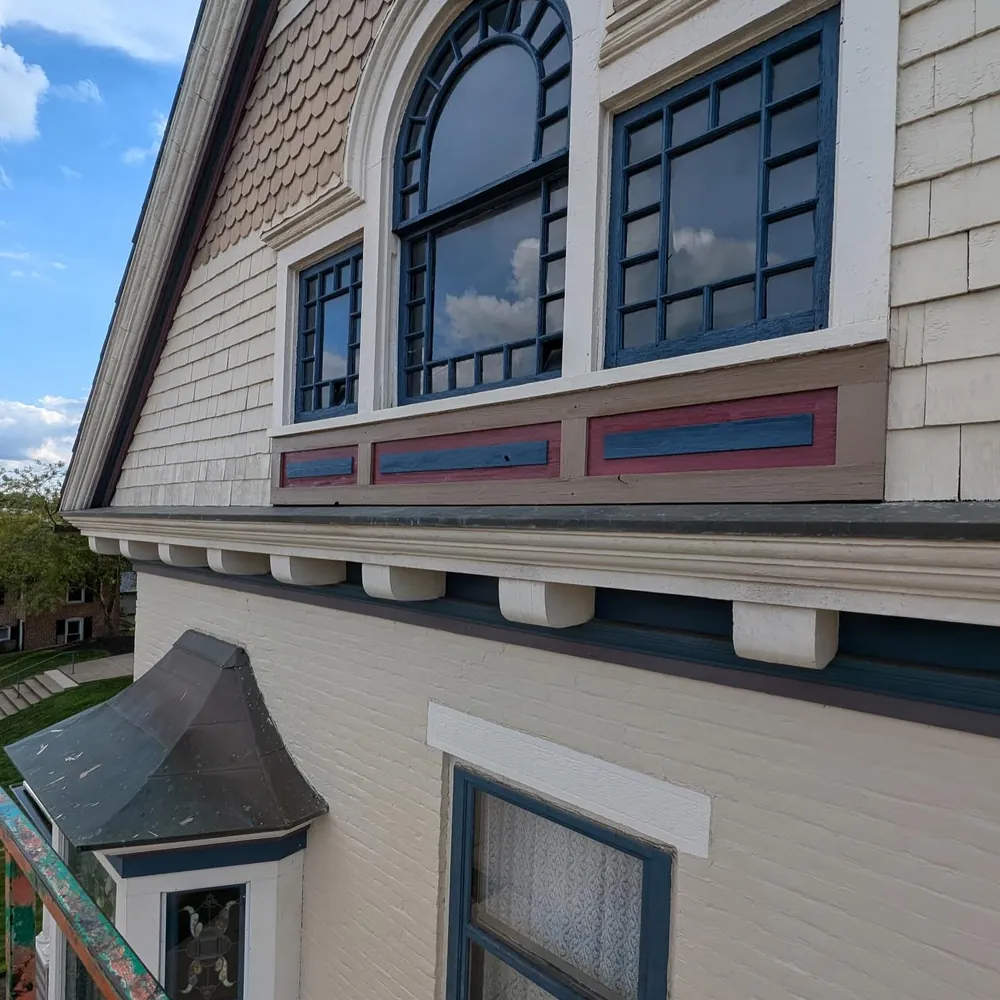
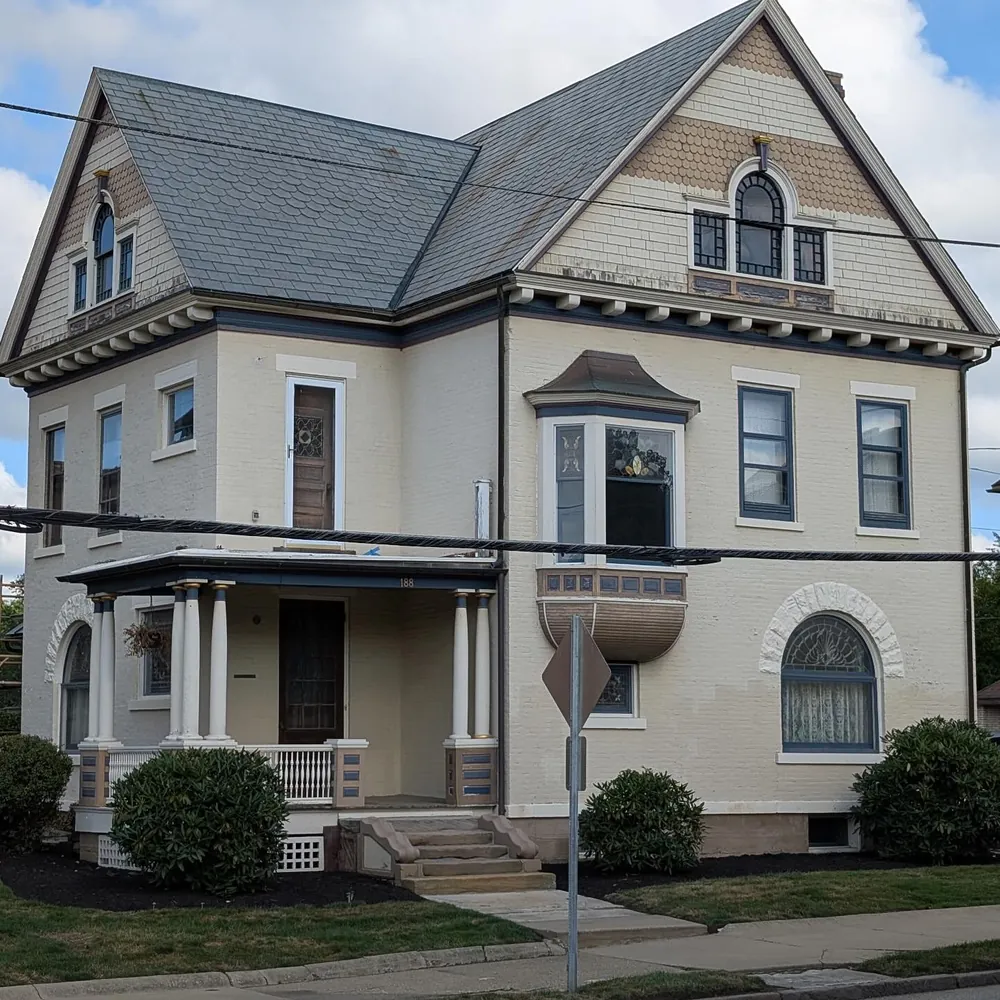
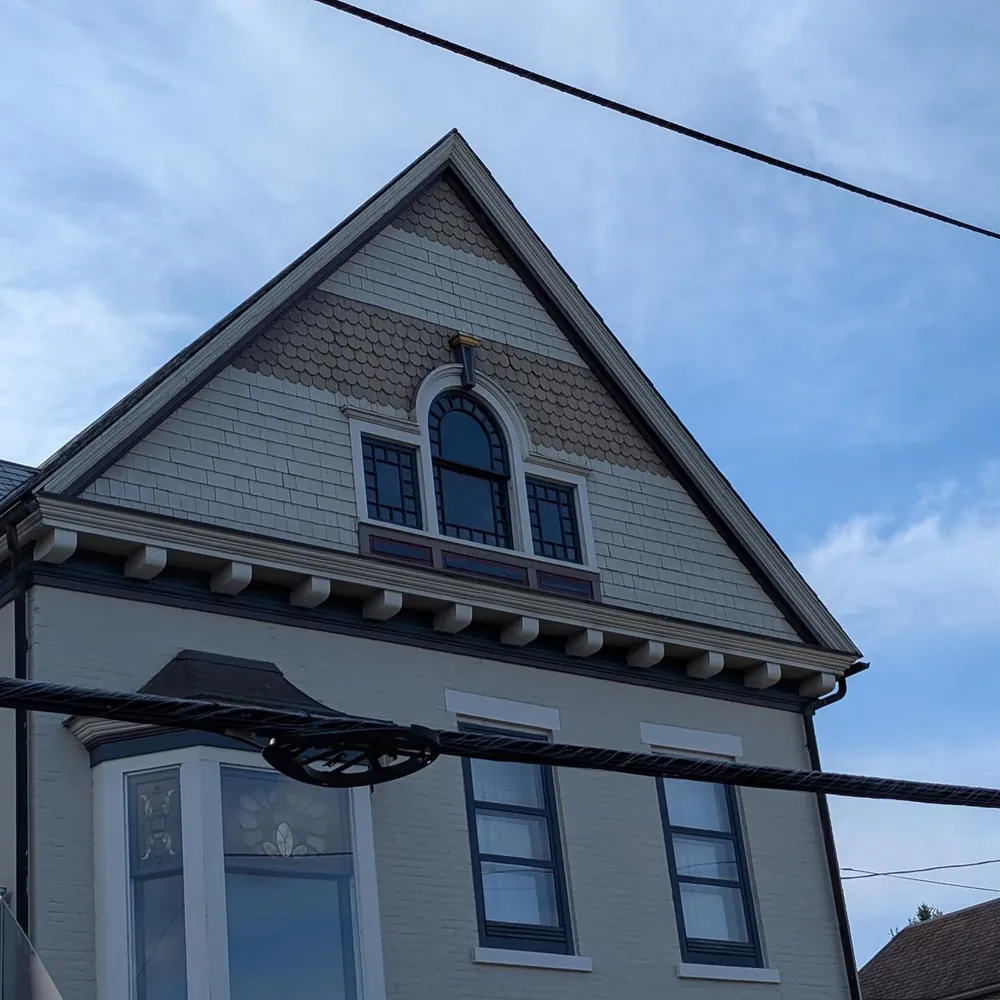
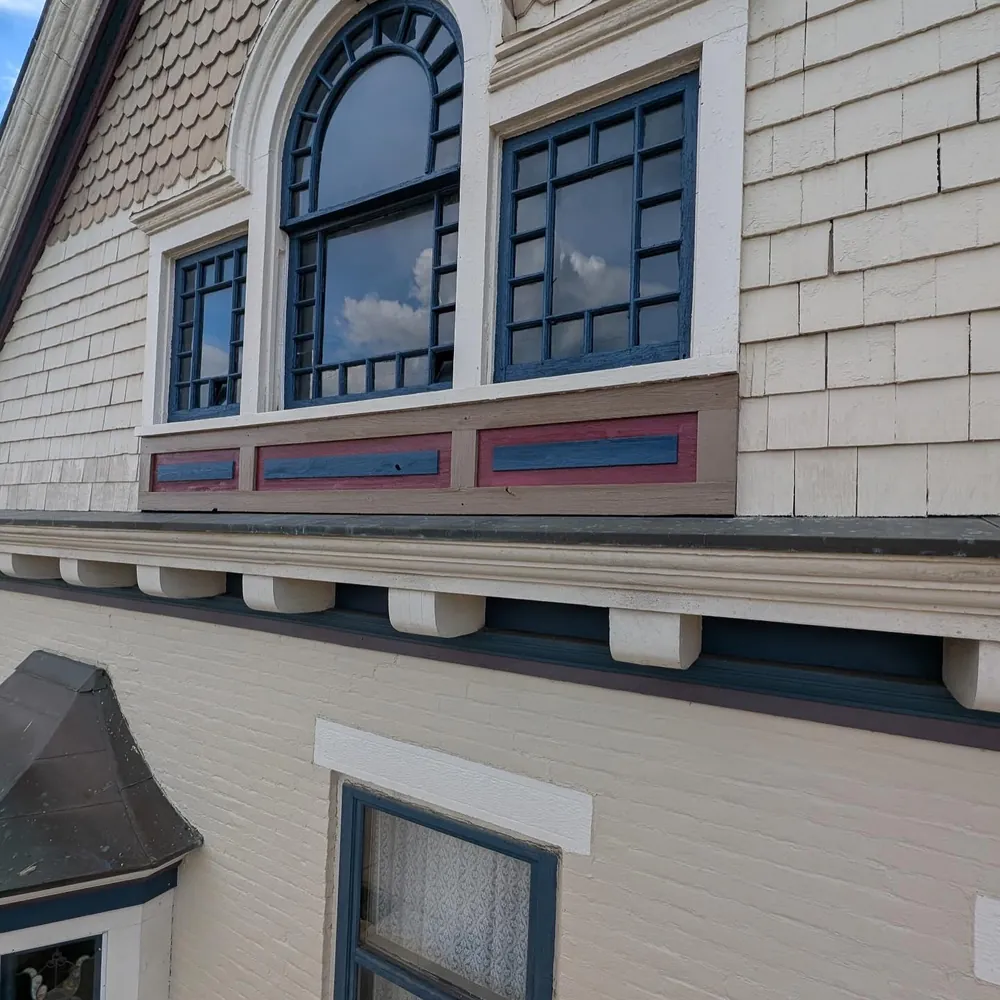
If you need exterior painting in Johnson County, the paint is only part of the job. According to the USDA Forest Products Laboratory, the most common causes of early paint failure are water, wood that weathered before it was painted, poor surface preparation and too thin a coat. Kansas City weather finds every one of those shortcuts. Johnson County Painting has painted house exteriors across the metro since 1981, and every exterior job starts with working out why the last coat failed.
What's Included: Siding, Trim, Soffits, Doors and Masonry
- Siding: wood lap, cedar, hardboard, fiber cement and other previously painted siding.
- Trim: fascia, soffits, window and door trim, corner boards, shutters and porch ceilings.
- Doors: front doors, side doors and garage doors.
- Masonry: brick, stucco and stone that has already been painted.
- Prep: washing, scraping loose paint, sanding edges, priming bare wood and caulking open joints.
- Protection: plants, walks, patios and fixtures covered, with cleanup when the job is done.
Signs Your House Needs Exterior Paint
- Peeling or flaking, especially near gutters, windows and the bottom row of siding.
- Chalking: a white powder that comes off on your hand.
- Faded color on the south and west sides compared with the shaded sides.
- Cracked or missing caulk at trim, windows and siding joints.
- Bare wood showing on trim, sills and fascia.
- Mildew that keeps coming back on the north side.
Do not wait long once wood is bare. Sunlight starts breaking down the surface of unprotected wood within hours. In Forest Products Laboratory tests, boards left in the sun for 16 weeks before painting had paint that peeled within 3 years, while boards painted without that exposure showed no peeling after 20 years.
Our Exterior Painting Process
Walk-around and free estimateWe check for peeling, chalking, mildew, soft wood and water problems, then price the prep along with the paint.
WashDirt, chalk and mildew come off first so primer and paint can bond.
Scrape and sandLoose paint is scraped back to a sound edge and the edges are sanded smooth. Soft or rotted wood is pointed out so it can be replaced before painting.
Prime and caulkBare wood and repairs get primer. Open joints at trim, windows and siding laps get caulk.
Finish coatsSiding first, then trim, doors and details, applied only when temperature, dew point and forecast allow.
Cleanup and final walk-aroundCoverings come off, the site is cleaned, and we go around the house with you.
Exterior Surfaces and What They Need: Wood Siding, Fiber Cement and Painted Brick
| Surface | What it needs | Expected paint life |
|---|
| Smooth pine or fir siding | Scrape, spot-prime, caulk, two topcoats | 6 to 10 years |
|---|
| Smooth cedar siding | Stain-blocking primer on bare spots, two topcoats | 10 to 15 years |
|---|
| Saw-textured cedar | Rough face holds more paint; clean well first | 15 to 20 years |
|---|
| Preprimed hardboard | Seal edges and swollen spots, keep caulk tight | 8 to 12 years |
|---|
| Fiber cement | Clean, prime bare cut edges, acrylic topcoats | Depends on paint and exposure |
|---|
| Painted brick or stucco | Clean, repair, masonry-rated coating | Recurring; varies by paint type |
|---|
Wood and hardboard figures: USDA Forest Products Laboratory, Wood Handbook (2010), Table 16-4, assuming a primer and two topcoats. With only one topcoat, expect about half. Masonry: Brick Industry Association, Technical Note 6.
If your brick has never been painted, think hard before starting. The Brick Industry Association notes that latex paint on brick creates a recurring maintenance task and can be very difficult to remove without damaging the masonry.
What Affects the Price of Exterior Painting
- Size and height. Two-story walls, walkout basements and steep lots need taller ladders and more setup.
- Condition. Heavy peeling means more scraping, sanding and priming, which is where most of the labor goes.
- Siding type. Rough and shingled surfaces take more paint; smooth lap siding goes faster.
- Trim detail. Decorative trim, shutters, porches and lots of windows add time.
- Number of colors. Body, trim and accent colors take more cutting-in than one color.
- Number of coats. Two topcoats over primer roughly doubles service life compared with one, per the USDA data above.
Exterior Painting and Kansas City Weather
Johnson County gets the full range. NOAA's 1991-2020 normals for Kansas City show July highs averaging 88°F, January lows averaging under 20°F and about 39 inches of precipitation a year. The median last spring freeze is April 13 and the median first fall freeze is October 24, a freeze-free season of about 193 days. Hail is part of the picture too: NOAA Storm Prediction Center records show hail reported in Johnson County on 94 separate days from 2006 through 2025.
That shapes when and how exterior paint goes on. Some exterior paints are rated for application down to 35°F, but manufacturers also want the surface at least 5 degrees above the dew point and no rain for several hours after. In spring and fall that means starting after the morning dew dries and stopping early enough for the paint to set before evening. If you live in a homes association, check your covenants before you choose colors; some require approval for exterior changes.